


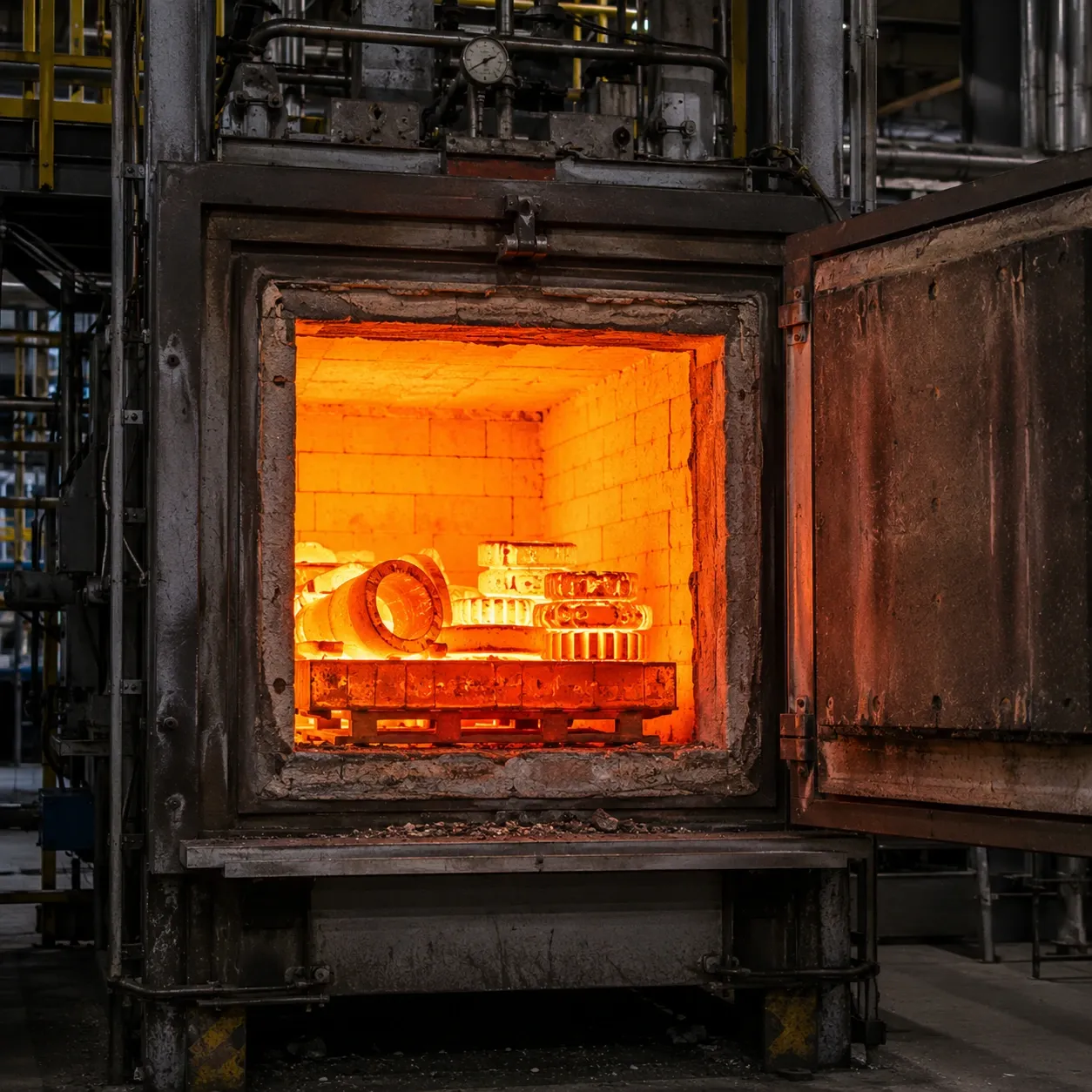
Industrial automation demands reliable sensing solutions regardless of operating conditions. Temperature extremes — whether the intense heat of a foundry or the bone-chilling cold of a freezer warehouse — can render standard sensors unreliable or non-functional. For applications where metal detection must occur in these demanding environments, specialty inductive proximity switches are the right tool for the job.
What Are Inductive Proximity Switches?
Inductive proximity switches are non-contact sensors that detect the presence of metallic objects by generating an electromagnetic field and monitoring changes in that field caused by nearby conductive materials. Because they rely on electromagnetic induction rather than physical contact, they have no moving parts to wear out and offer long service lives under normal operating conditions. The challenge arises when operating temperatures push far beyond the range of standard industrial sensors, which typically operate between -25 °C and +70 °C.
EGE Elektronik: A Specialty Sensor Manufacturer
The German manufacturer EGE Elektronik, distributed in North America by Pantron Automation, has built a reputation for producing inductive proximity switches specifically engineered for extreme temperature environments. EGE's engineering philosophy centers on the idea that the worst-case conditions in real-world production environments are often not captured by standard industry testing methods. As a result, EGE develops its own test protocols designed to replicate the actual stresses sensors encounter in critical applications — heat cycling, vibration, chemical exposure, and electromagnetic interference.
The result is a product line that covers an exceptionally wide temperature range, with solutions available for nearly every extreme environment found in modern industry.
High-Temperature Inductive Sensors
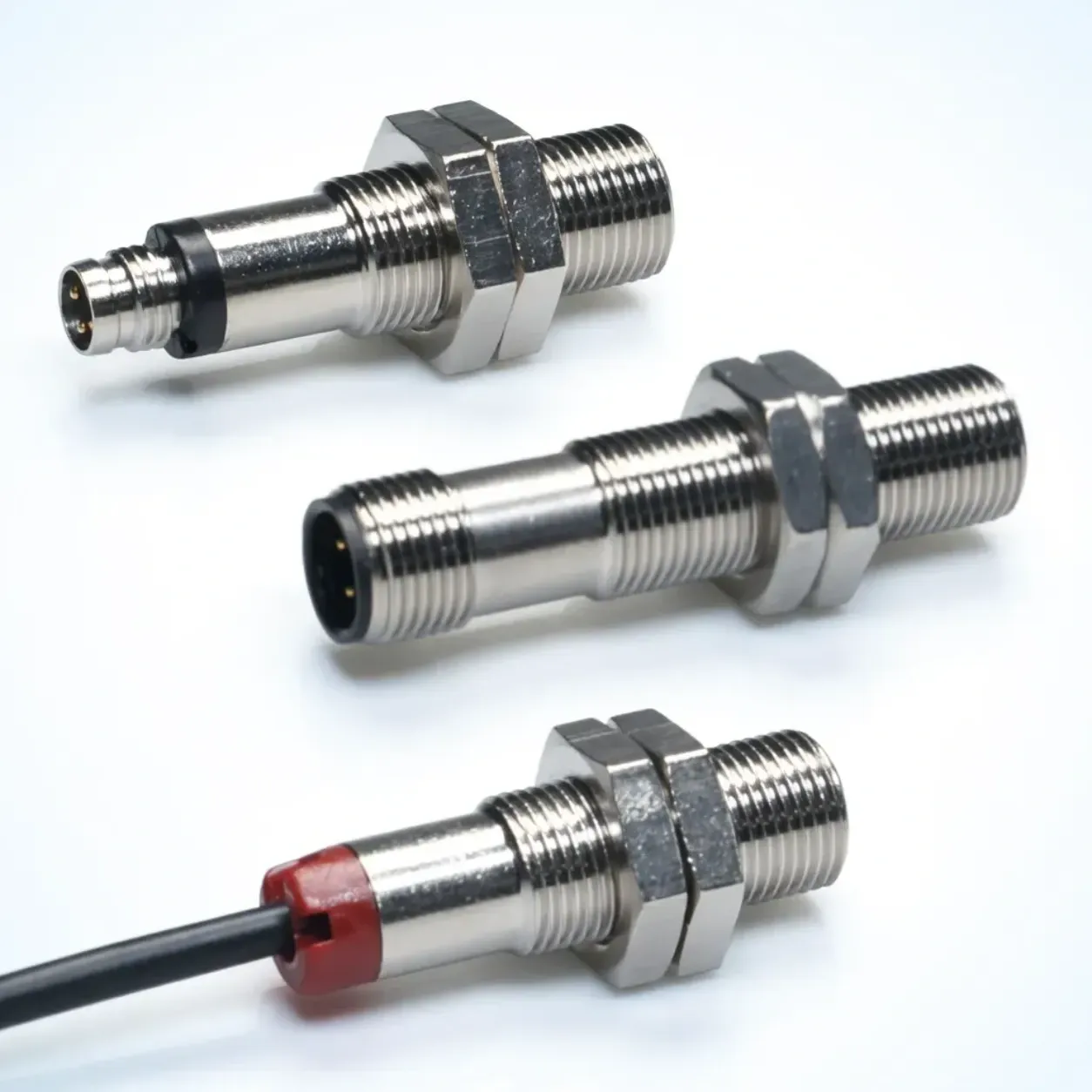
TROPICAL Series (Up to +120 °C)
EGE's TROPICAL series of inductive proximity switches is designed for elevated temperature environments and exceeds the IP 69K ingress protection rating. IP 69K is the most stringent standard available, confirming the sensor can withstand high-pressure, high-temperature water jet cleaning — a requirement in food processing, automotive paint shops, and similar washdown environments.
With a continuous operating range up to +120 °C, TROPICAL sensors are well-suited for applications such as:
- Metal casting and forming lines
- Automotive paint booth conveyors
- Corrugated cardboard and paper production
- Hot part detection in stamping or pressing operations
Extended High-Temperature Sensors (Up to +160 °C)
For applications that exceed the TROPICAL range, EGE also offers inductive proximity switches rated to +160 °C. These sensors are appropriate for areas closer to heat sources, such as monitoring metal parts exiting a heat treatment oven or detecting tooling position in a hot stamping press.
Ultra-High-Temperature Sensors (Up to +250 °C)
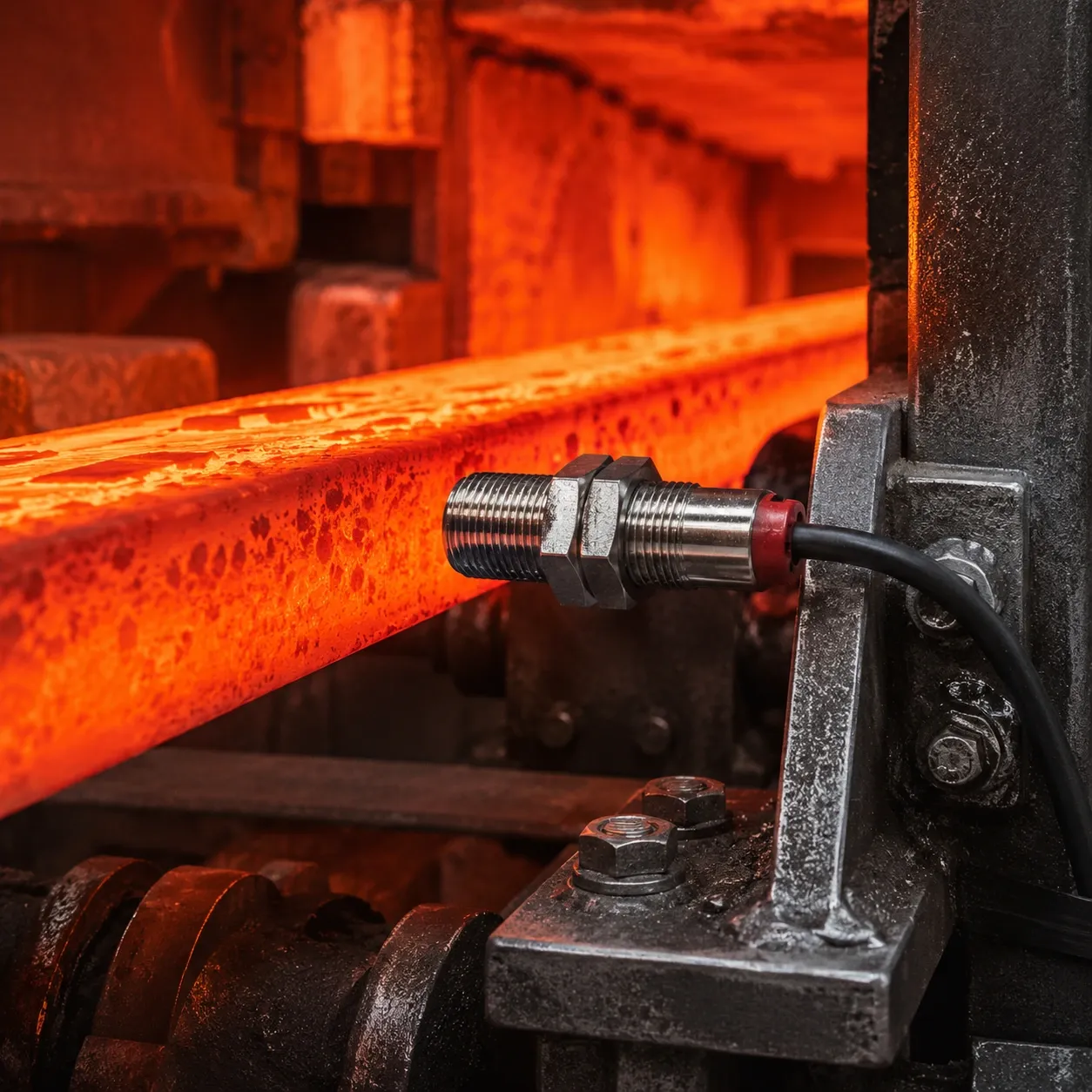
EGE's most extreme high-temperature inductive sensors operate continuously up to 250 °C. These models are built with armored cables capable of withstanding direct exposure to radiant heat, and they pair with external amplifiers that are positioned away from the heat source. The sensor head itself operates in the harshest zone, while the amplifier processes the output signal in a cooler, more protected location.
Applications at this temperature range include:
- Continuous casting and rolling mills in steel production
- Detection of billets, ingots, and hot metal workpieces
- Proximity sensing inside industrial ovens and kilns
- Aluminum and die casting operations
Low-Temperature Inductive Sensors
POLAR Series (Down to -60 °C)
At the opposite end of the spectrum, EGE's POLAR series is engineered for operation in deep-freeze environments down to -60 °C. These sensors are critical in industries such as cryogenic processing, cold storage logistics, and food freezing operations where conventional sensors fail due to material embrittlement, condensation, or ice formation inside the sensor housing.
POLAR sensors use materials and sealing compounds rated for sub-zero performance, ensuring consistent switching behavior even after extended exposure to freezing temperatures. This reliability is essential in automated cold-chain facilities where a missed detection can cause product jams, equipment damage, or safety hazards.
Additional Specialty Options
Beyond temperature range, EGE offers additional engineering solutions for demanding environments:
- Extended sensing distances up to 170 mm — enables placement further from heat sources, reduces physical wear from proximity to moving parts, and allows use in applications with significant mechanical vibration
- Chemical-resistant sensor bodies — housings manufactured from PTFE (polytetrafluoroethylene), PP (polypropylene), or PEEK (polyether ether ketone), each offering superior resistance to aggressive cleaning agents, lubricants, and industrial chemicals compared to standard nickel-plated brass or stainless-steel housings
- Rolling oil resistance — sensors engineered specifically for metalworking environments where cutting fluids and rolling oils are constantly present
- ATEX-certified intrinsically safe sensors — for use in explosive atmospheres classified under the European ATEX directive, covering both gas-EX and dust-EX classifications
- Compact dust-EX and gas-EX sensors — where space constraints prohibit standard explosion-proof enclosures
Why Standard Sensors Fail in Extreme Environments
Standard industrial sensors are designed and tested to perform within moderate environmental ranges. When pushed beyond those limits, several failure modes become common:
At high temperatures, the sensor's oscillator circuit — which generates the electromagnetic field used for detection — can drift, causing false outputs or loss of detection. Potting compounds and cable jackets soften, allowing moisture ingress. Electronic components degrade, reducing switching repeatability.
At low temperatures, plastic housings can crack from thermal contraction stress. Lubricants in cable assemblies solidify. Condensation followed by freezing can mechanically destroy internal components. Output response times slow due to changes in electronic behavior at low temperatures.
EGE's specialty sensors are engineered to address each of these failure points with appropriate materials, circuit designs, and manufacturing processes.
Selecting the Right Sensor for Your Application
When specifying an inductive proximity switch for an extreme temperature application, consider the following:
- Peak and continuous operating temperature — distinguish between brief temperature spikes and sustained exposure
- Required sensing distance — high-temperature applications may require longer standoff distances to protect the sensor
- Housing material compatibility — verify that the sensor body material is resistant to any chemicals present
- IP rating — high-pressure washdown environments require IP 69K; submersion requires appropriate IP 68 ratings
- Explosive atmosphere classification — if flammable gases or combustible dusts are present, ATEX certification is mandatory
- Cable configuration — armored cables for direct heat exposure; quick-disconnect styles for easy field replacement in accessible locations
Pantron Automation distributes EGE Elektronik sensors in North America and can assist in matching the correct sensor to your specific application requirements. With a product range spanning -60 °C to +250 °C and numerous housing, cable, and output configurations available, there is an EGE inductive proximity switch suitable for virtually any extreme-temperature metal detection application.